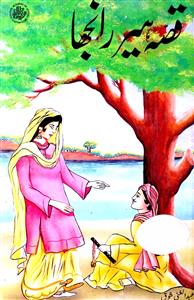
About The Book
Qissa Heer Ranjha by Abdul Ghani Shauq Dilawari Cheema is a verse narrative in which the poet gives Punjab’s ancient and popular tradition of the Heer-Ranjha love story a new semantic dimension through the collective experiences, personal emotions, and social observations of his own age. The story of Heer and Ranjha represents a long and continuous creative tradition within Punjabi poetry. Abdul Ghani Shauq likewise maintains a connection with this tradition while attempting to give it the voice of his own time. Alongside the traditional themes of love and romance, his Heer addresses issues such as social inequality, inflation, bribery, hoarding, falsehood, deceit, drug addiction, moral decline, and social discord, while also giving importance to truth, knowledge, reason, love, unity, and human compassion. According to the poet’s own statement, these themes have been woven into the poetic framework of the Heer-Ranjha narrative in such a way that the ancient story becomes a mirror of the problems of contemporary life.The significance of the book also lies in its being a verse narrative. The poet does not merely recount events; rather, he incorporates his personal experiences and genuine emotions into the characters and events of Heer, thereby creating a personal and contemporary voice. The language carries the fragrance of Punjabi culture, local idiom, and folk tradition, while its connection with the classical heritage of Punjabi poetry can also be viewed within the broader context of the Punjabi literary tradition preserved in both the Gurmukhi and Shahmukhi scripts. In this way, Shauq’s Heer does not break away from tradition; instead, it offers a renewed interpretation of it.Abdul Ghani Shauq’s work is also significant because the poet seeks to connect a well-known folk narrative with the social consciousness and inner experience of his own age. Qissa Heer Ranjha, therefore, is not merely a love story; it is also a noteworthy example of the interplay of Punjabi folk tradition, verse narrative, personal experience, and social criticism.